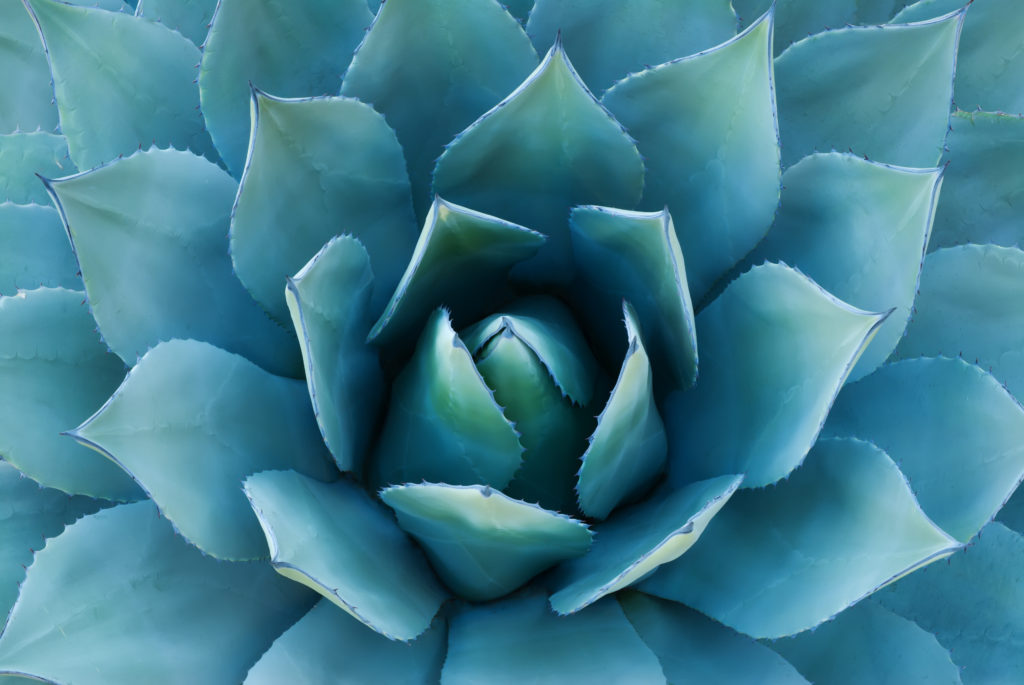
Agaves are the perfect selection for low maintenance gardens. These tough plants have a great structural look and are a natural choice for a specimen or accent plant in the landscape. When planting in the landscape, it is crucial to keep in mind the final size of the plant. Given that they have sharp spines at the end of each leaf, it is essential to keep it away from walkways, driveways, or footpaths to avoid any injuries. There are many different varieties of agaves; leaf colors vary from gray to green with cream or yellow stripes. They also differ significantly in size, depending on the variety. Agaves also make fantastic container plants. For containers, select smaller types of agave.
Plant agaves in sandy, well-drained soils. Water the new planting regularly until established. After the plant is several years old, it will flower. Once it blooms, it will grow pups from the side of the plant that can be harvested to create new plants or can be left in place to create a mass planting. Pruning and fertilization are not required; however, if you would like to fertilize, you can do so with a well-balanced formula in the spring, summer, and fall.
Some of our favorites: Agave ‘Blue Glow,’ Agave demestiana variegata, Agave angustifolia, Agave univittata
Note: These plants are grown for decorative purposes and are not intended for human or animal consumption
FAST FACTS
Outstanding Features: Perfect addition to a succulent garden

Common Name
Agave

Bloom Colors
Flower spears in yellow, orange or pink

Water
Water regularly until established

Zone
10 and above, 9 if protected from frost

Fertilizer
Well-balanced fertilizer throughout the growing season

Scientific Name
Agave spp.

Light
Full sun

Size
Varies depending on the variety

Overwintering
In zones 8 and lower, use as a container plant or as an annual in the landscape

Companion Plants
Other succulents and cacti