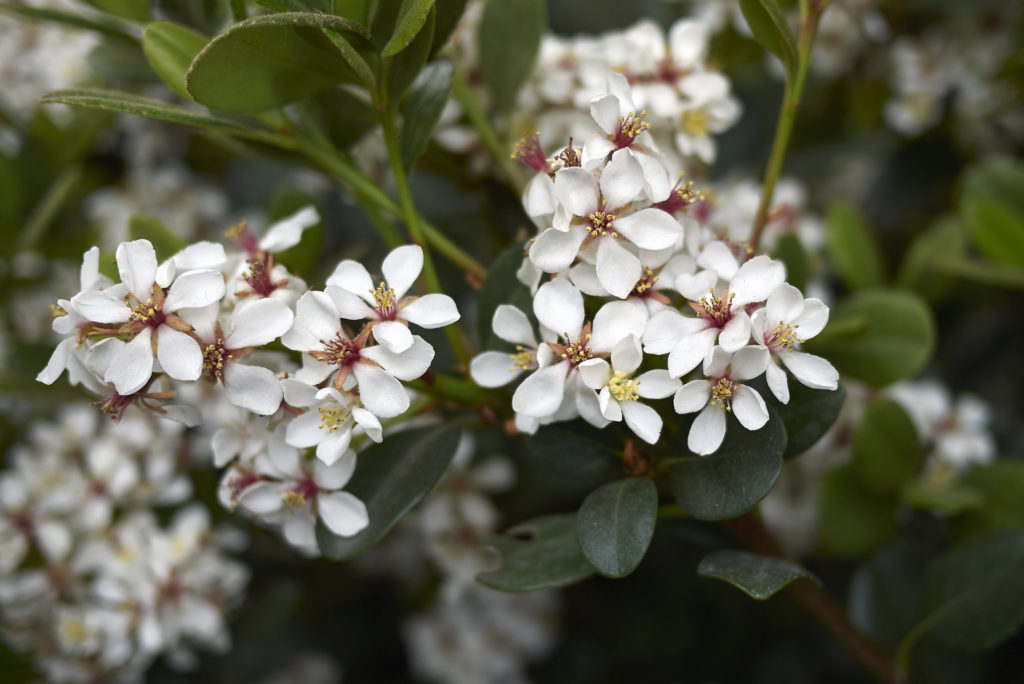
Indian Hawthorn is a charming bush that adds a delightful calming touch to garden beds and foundations alike. Its mounding habit makes it easy to take care of and requires a minimum of pruning. India hawthorn, as it is sometimes called, is not a fussy plant. It does well in a variety of soils, although it prefers mildly acidic soil. It can take a range of light from direct sun to partial shade, and established plants can tolerate some drought. In the spring, it produces pink or white star-shaped blooms. These later turn into dark blue-colored berries perfect for birds to munch on during the late spring and early summer months.
Plant India hawthorn almost anywhere where garden beds need some filling; these versatile plants will spread and cover an area of about 3 feet. They grow to about 2 ½ feet tall and are a very manageable slow-growing plant. Ideally, plant Indian hawthorn in the springtime. Feed about three times a year, starting in the spring with a good, all-purpose fertilizer.
Note: These plants are grown for decorative purposes and are not intended for human or animal consumption
FAST FACTS
Outstanding Features: Dense foliage, beautiful shiny green leaves

Common Name
Indian Hawthorn, India Hawthorn

Bloom Colors
Pink or white

Water
Water consistently until established, then as needed

Zone
8-10

Fertilizer
Feed in the early spring with an all-purpose fertilizer

Scientific Name
Rapheolepsis indica

Light
Direct sun can tolerate some dappled shade

Size
About 2 ½ feet tall and about 3 feet wide

Overwintering
In zones 7 and lower, use as a container plant or as an annual in the landscape

Companion Plants
Bottlebrush tree, creeping jasmine, lantana