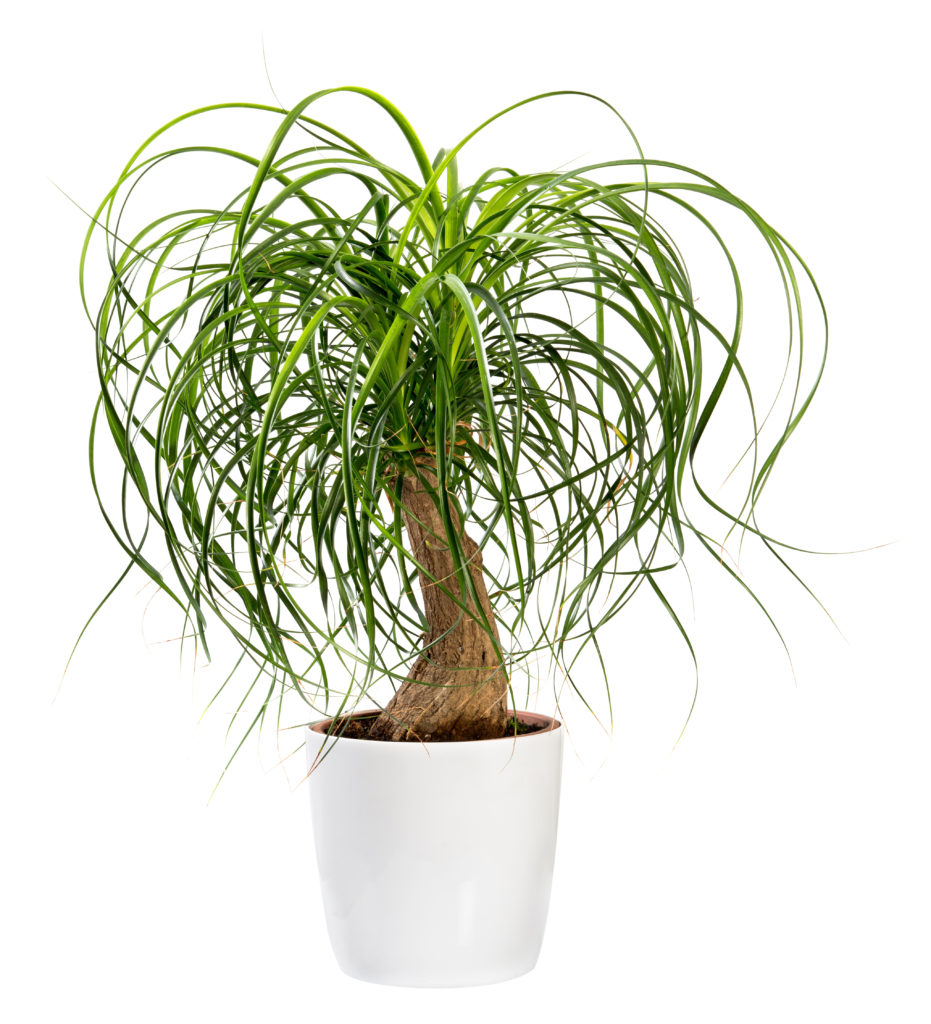
The ponytail palm is one of the easiest, low-maintenance houseplants you can get for your home. Classified as a succulent, it is neither a palm nor a tree. The swollen trunk holds water so it can go for short periods without water. You should wait to water the plant until the soil is almost dry. Too much water or soil that remains consistently moist will lead to root rot. The thin leaves that sprout from the top of the trunk give this plant its name, the ponytail-like foliage is deep green and can be curly or straight. Its fun foliage is particularly attractive to cats, so make sure it is up high, were our feline friends cannot get to it.
The ponytail palm loves high, bright, indirect light, so place it in a south-facing porch or window. Check the leaves regularly to make sure it is pest and disease-free. Fertilize the plant about three times a year once in the spring, then later in the summer and fall. Feed with a liquid fertilizer for houseplants. Fertilize the plant the day after it is watered; this will help avoid burning the roots. Pruning the ponytail is not necessary, just clip off the older leaves that will yellow and eventually die off the plant.
Note: These plants are grown for decorative purposes and are not intended for human or animal consumption
FAST FACTS
Outstanding Features: Attractive foliage, low maintenance plant

Common Name
Ponytail Palm, Elephant foot palm

Bloom Colors
None

Water
Water when the soil is mostly dry

Zone
Houseplant

Fertilizer
Well-balanced fertilizer throughout the growing season

Scientific Name
Beaucarnea recurvata

Light
High, bright, indirect light

Size
3 feet tall and 2 feet wide in the canopy

Overwintering
Houseplant; none necessary

Companion Plants
Succulents and cacti