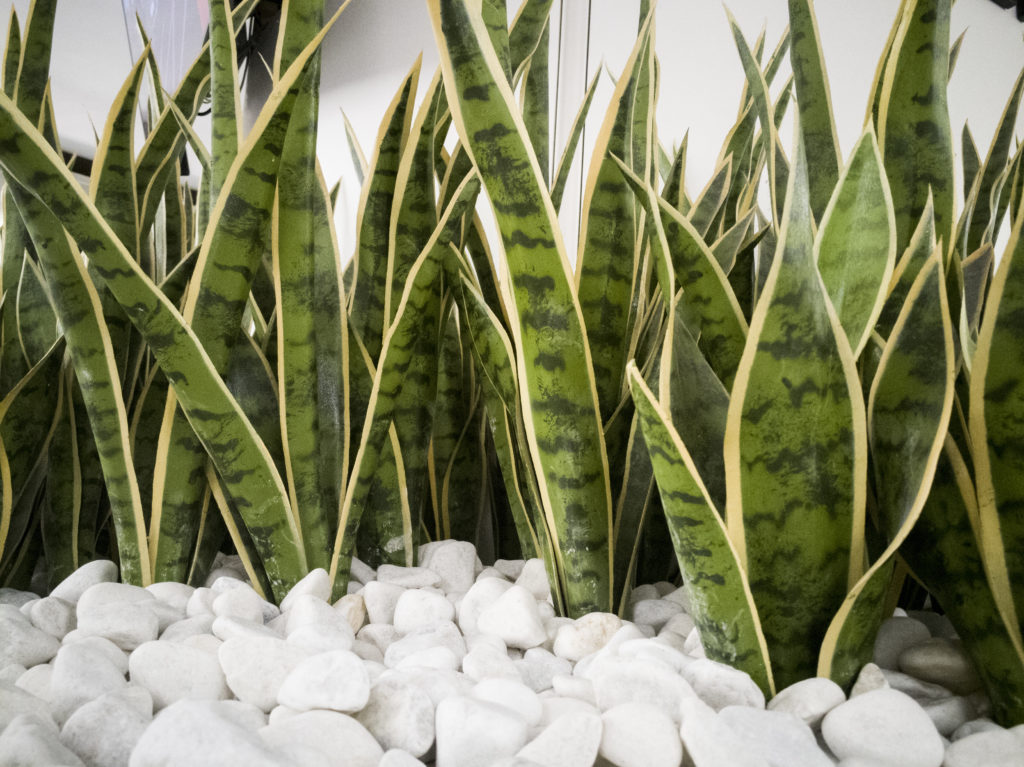
Durable and easy to grow, the snake plant gets its name from their long upright shape and their pointy tip. Snake plants make a no-fuss border plant or can be used in front of foundation plants such as clusia or podocarpus. They add an architectural look to indoor spaces and are perfect for narrow corners that need a little dressing up.
Plant the sansevieria in a location that gets direct sunlight or partial sunlight. Avoid completely shaded areas since the plant will grow thin and weak under these conditions. Sansevieria likes a well-drained soil; wet feet will cause it to get root rot. Fertilize the plant three times a year with a well-balanced fertilizer. Pruning is only necessary to remove any damaged or old leaves that detract from its clean, stylized look.
Note: These plants are grown for decorative purposes and are not intended for human or animal consumption
FAST FACTS
Outstanding Features: Adds height and visual interested to the garden, easy care

Common Name
Snake Plant, Mother-in-law-tongue

Bloom Colors
small, creamy white flower on rare occasions

Water
Water regularly until established, then as needed.

Zone
9 and above

Fertilizer
Well-balanced fertilizer throughout the growing season

Scientific Name
Sansevieria trifasciata

Light
Full sun to partial shade

Size
Varies depending on the variety

Overwintering
In zones 8 and lower, use as a container plant or as an annual in the landscape

Companion Plants
Crossandra, hibiscus and duranta